1.9K Reviews | 4.7 Star Rating | 20+ years of experience | 72k+ Patients Treated
Difficulty Swallowing Doctor - Dr. Scott Liu
Difficulty swallowing (dysphagia) is an issue that many individuals face and it leads to discomfort and even serious health conditions. Dr. Scott, GastroDoxs, in Houston, is a specialist in diagnosing and treating dysphagia based on individualized treatment plans, advanced diagnostics, and with compassion and care to enable you to safely and comfortably swallow food.
Dr. Scott Liu, MD, is a board-certified gastroenterologist with over six years of experience and a background in military medicine. He earned his medical degree from the University of Maryland, Baltimore, completed his Internal Medicine residency at Naval Medical Center Portsmouth, and finished his Gastroenterology fellowship through the National Capital Consortium. Dr. Liu provides comprehensive care for a broad range of digestive conditions, including abdominal pain, acid reflux, liver disease, chronic diarrhea, and colon cancer screening. He is a member of the American College of Gastroenterology and is known for his disciplined, patient-focused approach and clear communication.
What Is Difficulty Swallowing?
Difficulty swallowing or dysphagia is a complication where one finds it not easy to swallow food or liquid in the mouth to the stomach. You may be experiencing the sensation that your food is lodged or may experience pain when swallowing along with may choke on food or water when eating and swallowing.
Common Causes and Risk Factors
Gastroesophageal reflux disease (GERD) or acid reflux.
Esophageal strictures (esophageal constriction).
Stroke or Parkinson, as neuromuscular diseases.
Inflammatory or infectious inflammatory or infectious of the throat or esophagus.
Due to anxiety or stress, tightness of the throat.
Smoking or radiation of the neck/chest, old age.
Signs and Symptoms
Swallowing pain or burning.
Feeling of something stuck in the throat or the chest.
Coughing, gagging or choking during meals.
Salivating or vomiting food.
Drooling or failure to swallow some consistencies.
Unintentional weight loss.
How Dr. Scott Diagnoses This Condition?
Dr. Scott uses a step-by-step approach:
Medical History and Physical Exam
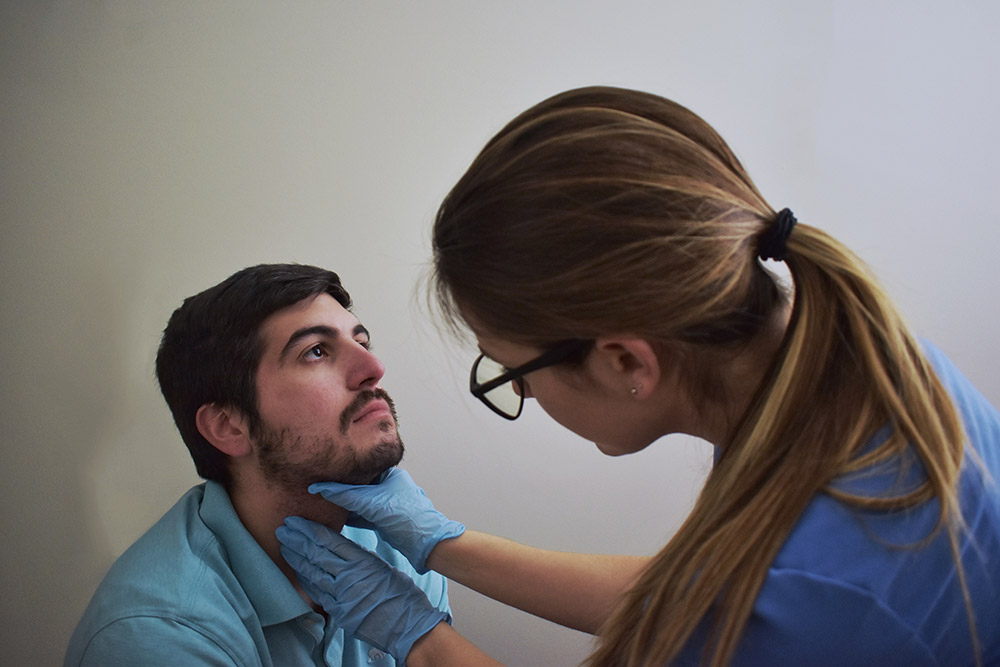
He investigates your swallowing symptoms, your eating habits and scrutinizes your prior medical history and provides you with a thorough test of your neck and throat.
Barium Swallow Study
To determine the integrity of passage and motility of food and liquid along your esophagus, you have X-rays that are taken using a barium solution under the guidance of Dr. Scott to determine whether there are any constrictions or motility issues.
Upper Endoscopy (EGD)
It entails insertion of a slim, flexible scope deep into the esophagus to view the lining of the esophagus so as to pinpoint inflammation, strictures or other defects. Biopsies can be taken in case of necessity.
Esophageal Manometry
A pressure-sensitive catheter This instrument measures the contractions of your esophagus muscles to detect motor disorders.
24-Hour pH Monitoring
Any acid exposure in a day, which is detected by a small probe that is inserted into your esophagus is a sign that gastroesophageal reflux is among the causes of your symptoms.
Speech and Swallow Evaluation
Dr. Scott will refer to a speech therapist and perform special swallowing assessment and therapy at the time.
Treatment
Our Team offers a full range of care for difficulty swallowing.
1. Lifestyle and Diet Changes
Eating less food in short intervals.
Consuming food slowly and chewing.
Foods that are cold, acidic, spicy and hot must be avoided.
Staying upright after meals.
Sleeping in a sitting position.
2. Medications
Proton pump inhibitors (PPIs) are taken to prevent acidic reflux.
Antihistamines to decrease stomach acid.
Looseensers esophagus spasms.
Therapy to be ingested with a professionally trained speech therapist.
3. Minimally Invasive or Advanced Procedures
Narrowing occurs under the influence of endoscopic dilation.
Dr. Scott Liu, MD, is a board-certified gastroenterologist with over six years of experience and a background in military medicine. He earned his medical degree from the University of Maryland, Baltimore, completed his Internal Medicine residency at Naval Medical Center Portsmouth, and finished his Gastroenterology fellowship through the National Capital Consortium. Dr. Liu provides comprehensive care for a broad range of digestive conditions, including abdominal pain, acid reflux, liver disease, chronic diarrhea, and colon cancer screening. He is a member of the American College of Gastroenterology and is known for his disciplined, patient-focused approach and clear communication.
Frequently Asked Questions
ICD-10 code of dysphagia?
The code that helps to diagnose and insure associated claims is R13.1.
Is it causing a swallowing problem due to acid reflux?
Yes. The chronic reflux can inflame or caliperate the esophagus making it hard to swallow.
Can anxiety have effects on the swallowing?
Yes. Stress and anxiety may cause a tight-throat, but precautionary measures must be first taken that it is not brought about by physical causes.
Which are the diagnostic tests of dysphagia?
Barium swallow, upper endoscopy, esophageal manometry and pH monitoring are some of the tests that are usually used in diagnosis.
Is surgery always needed?
No. Lifestyle change and diet, medications or simple endoscopy are some of the responses of some patients.
When should I see a doctor?
Refer to a specialist in the event of the issue of swallowing longer than two weeks or when there is an unexplainable reduction in weight.
Before I am appointed, what should I do?
Write down a list of your symptoms, any medical tests you have taken before and all medicines you take to your visit.
Related Blogs
How an Upper Endoscopy Can Identify Your Digestive Discomfort