1.9K Reviews | 4.7 Star Rating | 20+ years of experience | 72k+ Patients Treated
Best Colonic Pseudoobstruction Doctor
GastroDoxs of Houston is a facility that is under the supervision of Dr. Scott; that is common with colonic pseudoobstruction (Ogilvie syndrome). He provides patients with high-quality treatment, proper diagnosis, minimally invasive surgery, and empathy with the aid of high-quality imaging, prescription drugs, these methods assist patients in getting rid of their symptoms and preventing serious complications.
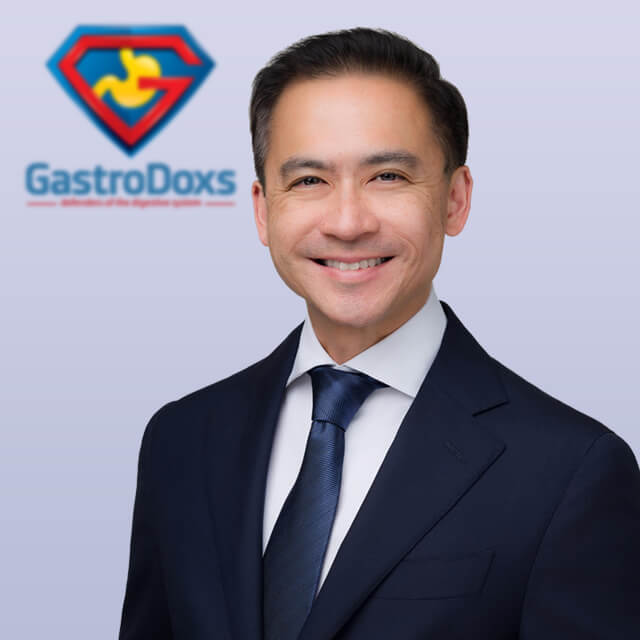
Dr. Scott Liu, MD, is a board-certified gastroenterologist with over six years of experience and a background in military medicine. He earned his medical degree from the University of Maryland, Baltimore, completed his Internal Medicine residency at Naval Medical Center Portsmouth, and finished his Gastroenterology fellowship through the National Capital Consortium. Dr. Liu provides comprehensive care for a broad range of digestive conditions, including abdominal pain, acid reflux, liver disease, chronic diarrhea, and colon cancer screening. He is a member of the American College of Gastroenterology and is known for his disciplined, patient-focused approach and clear communication.
What Is Colonic Pseudoobstruction?
The colonic pseudoobstruction also known as the Ogilvie syndrome is a condition where the large intestine comes to a standstill due to a non-mechanical obstruction despite the intestine having stopped to push the stool. The colon is distended with resultant pain, bloating and constipation. It needs to be treated immediately to prevent such serious conditions like perforation.
Common Causes and Risk Factors
In the recent past, abdominal or pelvic surgery has been performed.
Critical or serious hospital infection.
Slackening bowel motion (e.g. opioids) drugs.
Potassium or magnesium deficiency.
Nervous system (Parkinson disease, spinal cord injury) disorders.
Age above 60 years or chronic hospitalization.
Signs and Symptoms
Quick succession of abdominal swelling.
Persistent, or spasmodic, abdominal pain.
Problem of passing gas / stool.
Nausea or vomiting
Small meals followed by early satiety.
How Dr. Scott Diagnoses This Condition?
Dr. Scott uses a step-by-step approach:
Medical History and Physical Exam
He speaks about your final surgeries (abdominal or pelvic specifically), any currently prescribed medicine (opioids), and any acute illnesses. Dr. Scott asks about the development of bloating and pains in your abdominal area or diffuse pain in the abdomen and change in bowel movement. Abdominal examination will be carried out to analyze distension, tenderness and bowel sounds.
Laboratory Tests
Blood work is a test to determine electrolytes (potassium, magnesium), complete blood count, and indicators of infection or inflammation to rule out the other diagnoses, and to compensate inbalances that might increase gut motility.
Imaging Studies
Abdominal X-ray: Quickly identifies colon dilation and eliminates a mechanical obstruction.
CT Scan: The CT scan is a detailed cross-sectional image which may rule out perforation, ischemia or underlying mass.
Endoscopic Evaluation & Decompression (if needed)
Colonoscopic decompression can help to make the diagnosis and relieve the gas pressure to prevent perforation that may occur even during noninvasive tests, or when an urgent relief is required.
Treatment
Our Team offers a full range of care for colonic pseudoobstruction.
1. Lifestyle and Diet Changes
Eat small meals that are low in fiber until symptoms improve
Stay hydrated with clear fluids or electrolyte drinks
Try short walks to help restart gut movement
2. Medications
Neostigmine: The effect is fast-acting in the majority of cases to hasten the bowel movements.
Laxatives or stool softeners: Only taken by prescription.
Adjustment of any drugs which can slacken your bowels (e.g., opioids)
3. Minimally Invasive or Advanced Procedures
Colonoscopic decompression: Pass tube via the scope to force out the excess gas.
Cecostomy: This is a rare, with a narrow focus, surgery, designed to relieve excessive pressure.
Close and close-up care of our partners in the Houston hospital.
Dr. Scott Liu, MD, is a board-certified gastroenterologist with over six years of experience and a background in military medicine. He earned his medical degree from the University of Maryland, Baltimore, completed his Internal Medicine residency at Naval Medical Center Portsmouth, and finished his Gastroenterology fellowship through the National Capital Consortium. Dr. Liu provides comprehensive care for a broad range of digestive conditions, including abdominal pain, acid reflux, liver disease, chronic diarrhea, and colon cancer screening. He is a member of the American College of Gastroenterology and is known for his disciplined, patient-focused approach and clear communication.
Frequently Asked Questions
What is the distinction between pseudoobstruction and ileus?
The syndrome of Ogilvie affects the large bowel only because ileus decelerates the motility of the entire digestive tract.
Is this an emergency?
Yes. It is not treated, thus the colon might continue to over-distend, tear or perforate and lead to severe complications.
What's the ICD-10 code?
Colonic pseudoobstruction (the syndrome of Ogilvie) is coded at K59.81.
Is neostigmine a useful medication?
Yes. Neostigmine has been shown to be clinical in alleviating the symptoms of up to 90 per cent of the cases after a period of hours.
Can food changes help?
Absolutely. Below the size of a grain along with adequate hydration are helpful with medical treatment in assisting bowel healing.
Will I need surgery?
Most of the patients are responsive to drugs or colonoscopic decoagulation. Rare cases of severe ones are left to surgery.
How do I prepare to decompress?
We will provide you with specific instructions-primarily, fasting, IV fluids and adjustments of medications-before your procedure.
Related Blogs
Feel Like You Always Have Food Stuck in Your Throat? You May Have Dysphagia