They Feel Similar… But They’re Not the Same
Let’s start with what most people experience:
You go to the bathroom… And something doesn’t feel right.
- Maybe there’s:
- Pain
- A bit of blood
- Discomfort that lingers
And then comes the question:
“Is this hemorrhoids… or something else?”
For many people, the confusion is between hemorrhoids (piles) and anal fissures. They share similar symptoms—but they are completely different conditions.
Understanding the difference is important because:
- The cause is different
- The treatment approach is different
- Ignoring it can make things worse
Let’s break it down simply.
What Are Hemorrhoids? (Quick Recap)
Hemorrhoids are swollen veins in the rectum or around the anus.
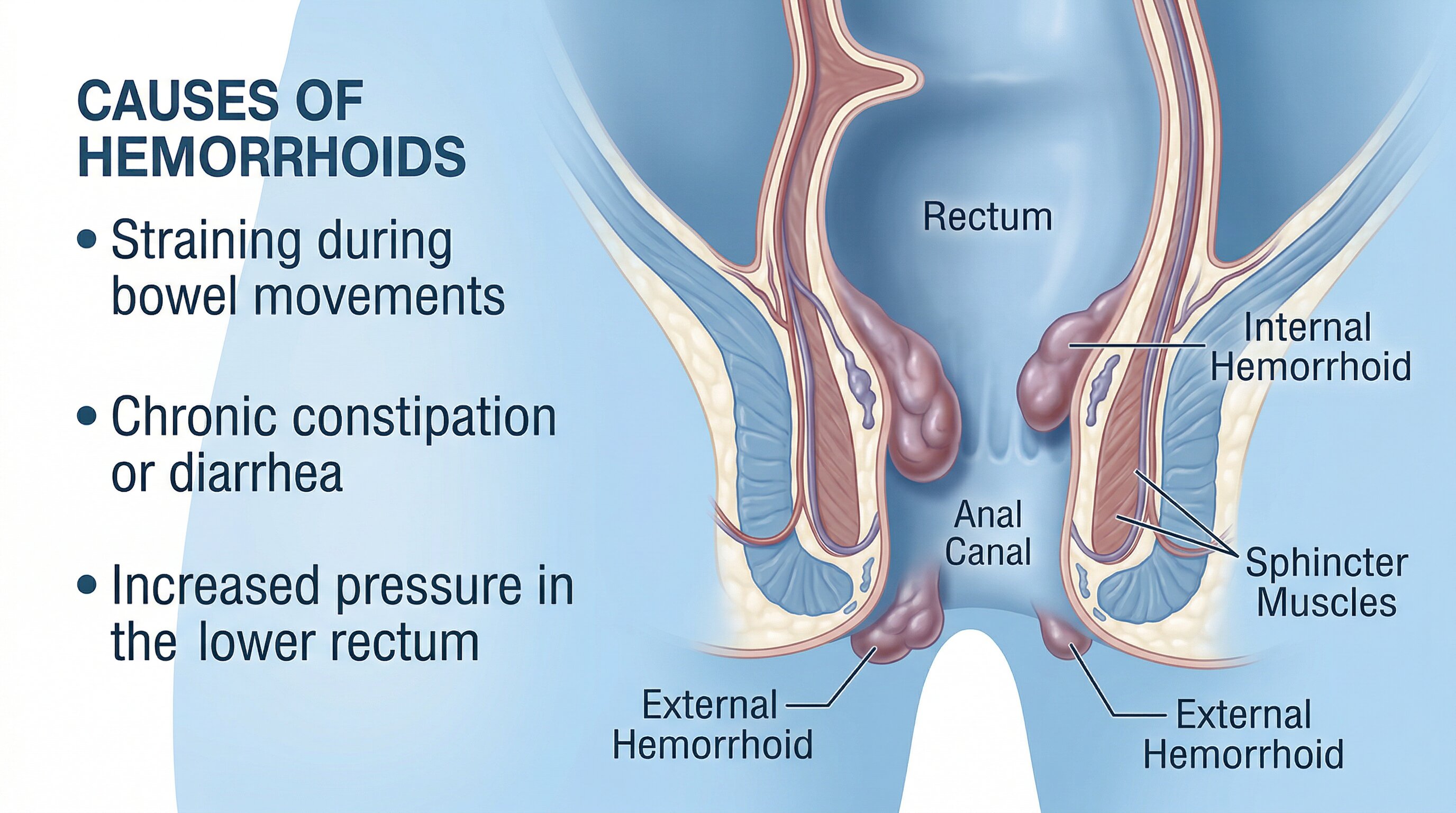
They’re usually caused by:
- Straining
- Constipation
- Pressure in the lower rectum
What Is an Anal Fissure?
An anal fissure is a small tear in the lining of the anus. Think of it like a tiny cut in a very sensitive area.
What causes it?
- Passing hard stool
- Severe constipation
- Trauma to the anal lining
Why it hurts more:
Unlike hemorrhoids, a fissure is an actual tear, which makes it:
- Sharper in pain
- More noticeable during bowel movements
The Core Difference (In One Line)
- Hemorrhoids = swollen veins
- Anal fissure = a tear in the skin
Symptom Comparison (This Is Where It Gets Clear)
Let’s break it down side by side:
Pain
- Hemorrhoids: Usually mild or none (especially internal). External ones may cause discomfort.
- Anal Fissure: Sharp, intense pain. Feels like a cut or tearing sensation. Pain can last minutes to hours after passing stool.
If the pain is severe and sharp → more likely a fissure
Bleeding
- Hemorrhoids: Bright red blood. Usually painless.
- Anal Fissure: Bright red blood. Often accompanied by pain.
Blood + pain together strongly suggests a fissure
Timing of Pain
- Hemorrhoids: Discomfort may be constant or mild.
- Anal Fissure: Pain peaks during and after bowel movement.
Itching and Irritation
- Hemorrhoids: Common symptom due to swelling and irritation.
- Anal Fissure: Less common. Pain is the dominant symptom.
Physical Feel
- Hemorrhoids: May feel like a lump or swelling.
- Anal Fissure: Usually not felt as a lump. More like a sore or cut.
Why People Confuse Them So Often
Because both conditions:
- Affect the same area
- Can cause bleeding
- Are linked to bowel movements
Without understanding the pain pattern, it’s easy to misjudge.
What Causes Each Condition (Clear Separation)
Hemorrhoids Causes:
- Chronic constipation
- Straining
- Sitting too long
- Pregnancy
- Low-fiber diet
Anal Fissure Causes:
- Passing hard stool
- Sudden trauma during bowel movement
- Chronic constipation
Can You Have Both at the Same Time?
Yes—and it’s more common than people think.
Constipation can lead to:
- Straining → hemorrhoids
- Hard stool → fissure
This makes diagnosis even more confusing without proper evaluation.
How to Identify at Home (Basic Guide)
While diagnosis should be confirmed by a doctor, here’s a simple way to differentiate:
Likely Hemorrhoids if:
- Bleeding without pain
- Mild discomfort or itching
- Feeling of swelling
Likely Anal Fissure if:
- Sharp pain during bowel movement
- Pain continues after
- Fear of going to the toilet due to pain
This isn’t a replacement for diagnosis—but a helpful starting point.
Treatment Differences (Very Important)
Hemorrhoids Treatment
- Lifestyle changes
- Fiber intake
- Medications
- Procedures (if severe)
Anal Fissure Treatment
- Stool softeners
- Healing ointments
- Relaxing the anal muscles
- Surgery (in chronic cases)
Treating a fissure like hemorrhoids (or vice versa) can delay recovery.

When Should You See a Doctor?
Don’t rely on guesswork if:
- Pain is severe
- Bleeding continues
- Symptoms don’t improve
- You’re unsure what it is
Early diagnosis = faster relief
Common Mistakes People Make
- Assuming All Bleeding = Hemorrhoids
This leads to wrong treatment. - Ignoring Pain
Pain is a key differentiator—don’t overlook it. - Delaying Consultation
Waiting too long can worsen both conditions.
Prevention Tips (Works for Both)
- Eat a high-fiber diet
- Stay hydrated
- Avoid straining
- Don’t sit too long on the toilet
- Stay active
These habits reduce risk for both conditions.
Final Thought
Not all discomfort in this area is the same—and guessing can lead to the wrong treatment.
Understanding the difference between hemorrhoids and anal fissures helps you:
- Take the right action
- Avoid unnecessary pain
- Recover faster
When in doubt, clarity is always better than assumption.
If you’re experiencing symptoms and aren’t sure what’s causing them, getting a proper evaluation can help you move from confusion to clarity—and relief.