






After a person hears the word cirrhosis, two questions usually come next. The first is whether it can be reversed. The second is what can actually be done now.
Those are the right questions. Cirrhosis is a long-term condition, but it is not a condition where nothing matters. Treatment can slow progression, reduce complications, improve quality of life, and in many cases change the course of what happens next.
This guide explains how cirrhosis is treated, whether it can be reversed, what lifestyle changes matter most, how diet fits in, what symptoms require urgent care, and when transplant evaluation becomes necessary.
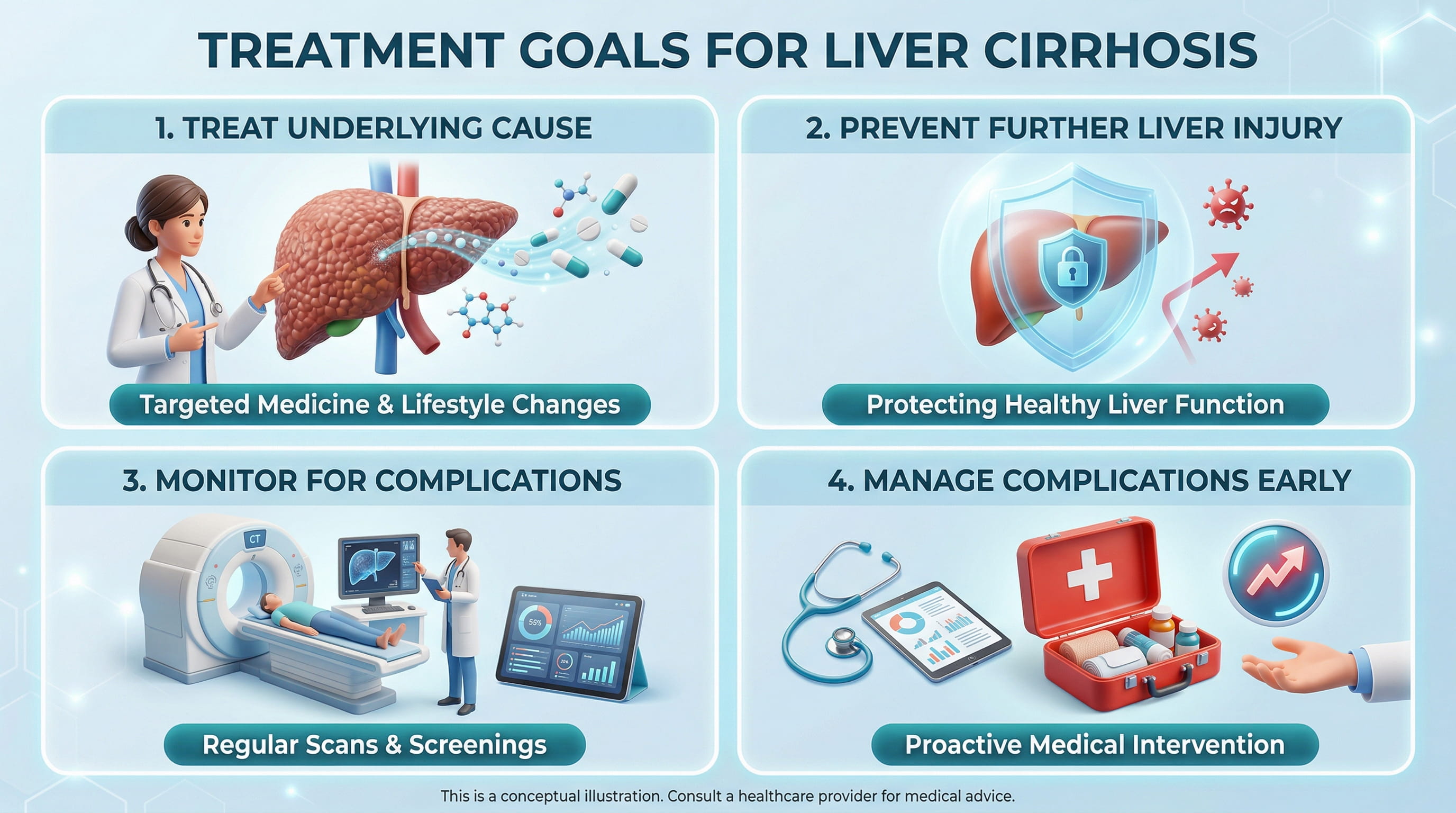
Cirrhosis treatment focuses on four goals:
Treatment may include complete alcohol avoidance, weight loss when fatty liver disease is involved, antiviral therapy for hepatitis, sodium restriction for fluid buildup, medicines to reduce complications, endoscopy to monitor bleeding risk, and liver transplant evaluation in advanced disease.
Established cirrhosis usually means permanent scarring of the liver. That scar tissue generally does not fully disappear.
However, that does not mean treatment is useless. In real-world care, treatment can still:
In other words, cirrhosis may not be “cured” in the simple sense, but it can often be managed more effectively than many patients expect.
The single most important part of cirrhosis care is finding the cause.
Complete alcohol avoidance is essential. Continued alcohol use after cirrhosis diagnosis greatly increases the risk of progression and complications.
Antiviral treatment may reduce ongoing liver injury and improve outcomes.
When cirrhosis is related to fatty liver disease, management often focuses on weight reduction, control of diabetes, treatment of metabolic risk factors, and long-term lifestyle change.
These conditions may require disease-specific medications and specialist monitoring.
Doctors may stop or change medications that could worsen liver damage.
Without treating the underlying cause, symptom control alone is not enough.
Patients with cirrhosis often ask what makes the disease worse. Several things matter.
This is one of the clearest recommendations in cirrhosis care.
Not every over-the-counter medicine is safe in advanced liver disease. Pain medicine, supplements, and herbal products should be reviewed with a clinician.
Because cirrhosis raises infection risk, routine preventive care matters.
When obesity, diabetes, insulin resistance, or high triglycerides are involved, liver disease may worsen faster without ongoing management.
A large part of cirrhosis treatment centers on portal hypertension. This is the increased pressure in the portal venous system caused by scarring and disrupted blood flow through the liver.
Portal hypertension drives many of the most dangerous complications.
Ascites is managed through a combination of:
Patients with ascites often need more frequent follow-up, because fluid buildup can worsen quickly and become infected.
Doctors may use:
Preventing a first bleed is important because gastrointestinal bleeding in cirrhosis can be severe and life-threatening.
Hepatic encephalopathy is treated by lowering toxin burden and looking for triggers such as infection, bleeding, dehydration, constipation, medication effects, or kidney injury.
Patients and families should know that confusion, unusual sleepiness, and personality changes are not minor symptoms in cirrhosis.
Diet does not cure cirrhosis, but nutrition is a core part of management. Many patients with cirrhosis are at risk for muscle wasting and malnutrition, even if they do not look underweight.
A practical cirrhosis diet usually emphasizes:
Some patients assume they should avoid protein because of liver disease. In many cases, the opposite is true. Inadequate protein can worsen muscle wasting and frailty. Nutrition plans should be individualized, especially in advanced disease.
Sodium makes fluid retention worse. Patients with ascites or leg swelling are often advised to reduce sodium substantially, especially from restaurant food, canned soups, packaged snacks, sauces, and processed meals.
A low-sodium diet is one of the most important self-care habits in fluid-related cirrhosis.
Supplements are a common area of confusion. People with liver disease often search for vitamins, detoxes, teas, cleanses, or herbal products online. But “natural” does not automatically mean safe.
Some supplements can actually worsen liver injury or interact with medications. Patients should review any supplement with their clinician before taking it.
Cirrhosis care is not just about treating symptoms when they appear. It is also about looking ahead.
Liver cancer screening
People with cirrhosis need regular surveillance for hepatocellular carcinoma.
Variceal assessment
Patients may need endoscopy depending on severity and risk.
Nutritional monitoring
Loss of muscle and frailty can develop quietly.
Lab and imaging follow-up
Tracking liver function, kidney function, bilirubin, albumin, coagulation, and fluid-related changes helps guide care.
Surveillance often makes the difference between catching a problem early and finding it only after it becomes severe.
Seek urgent care for:
These symptoms can reflect internal bleeding, infection, severe fluid shifts, or worsening liver failure.
Many people want to know whether they can still work, travel, exercise, and live normally with cirrhosis. The answer depends on stage and complications.

Light to moderate activity may help maintain muscle mass and energy in stable patients.
Some people continue normal routines, while others struggle with fatigue, appointments, fluid retention, or mental fog.
Travel may still be possible in stable cirrhosis, but patients with recent bleeding, severe ascites, or encephalopathy need more caution.
A cirrhosis diagnosis can be emotionally heavy. Anxiety, fear, guilt, and uncertainty are common. Emotional support matters.
Because symptoms like encephalopathy may first be noticed by others, family members often play an important role in care.
Transplant evaluation becomes more important when cirrhosis continues to progress or causes recurring major complications.
Common triggers for transplant discussion include:
Not every patient needs a transplant, but early referral can matter in the right situation.
Several patterns show up often in cirrhosis care:
Waiting too long to seek evaluation
People may normalize fatigue, swelling, jaundice, or black stools for too long.
Focusing only on symptoms, not the cause
Treating bloating or nausea without addressing the source of liver injury is not enough.
Ignoring nutrition
Poor intake and muscle loss worsen outcomes.
Assuming supplements will fix the problem
Unverified “liver detox” products can be risky.
Continuing alcohol after diagnosis
This can accelerate progression significantly.
Skipping surveillance
A person may feel stable and still develop bleeding risk or liver cancer.
A cirrhosis care plan should be individualized. Useful questions include:
Cirrhosis treatment is not one pill or one short-term fix. It is a long-term strategy built around cause control, complication prevention, nutrition, surveillance, and rapid action when symptoms worsen.
The most important message is this: cirrhosis may be serious, but it is not a diagnosis where nothing can be done. The earlier a patient gets evaluated and the more consistent the follow-up, the better the chance of slowing progression and protecting quality of life. For patients who need digestive or liver-related evaluation, GastroDoxs can help start the workup and guide next-step GI care.
Patients sometimes imagine cirrhosis treatment as one prescription or one diet sheet. In practice, the care plan is usually layered and ongoing. A typical long-term plan may include:
That is why cirrhosis management works best when patients understand that consistency matters as much as any single intervention.
Many patients ask for simple daily guidance rather than abstract nutrition rules. A practical approach may look like this:
A protein-containing breakfast such as eggs, Greek yogurt, or a bean-based meal can help reduce long fasting times.
A balanced lunch may include lean protein, vegetables, and a whole grain or other tolerated complex carbohydrate.
Dinner should avoid heavy sodium loads from restaurant food, canned soups, processed meats, and packaged sauces, especially in patients with ascites.
Some patients benefit from a late-evening snack with protein to reduce overnight fasting and support muscle maintenance.
Exact recommendations vary, but the larger principle is to avoid under-eating, preserve muscle, and limit sodium when fluid retention is a problem.
Patients do not need fear-based food advice, but some patterns commonly worsen symptoms or make management harder:
Often, outcomes improve not from one miracle food but from removing the habits that keep stressing the liver.

Exercise is often overlooked, especially if the patient is fatigued. But in stable patients, movement can help preserve strength, reduce deconditioning, and support overall metabolic health.
That does not mean intense exercise is right for everyone. The best plan depends on disease stage, energy level, muscle wasting, balance, and fluid status. Even walking, light resistance work, or supervised movement can be meaningful when done consistently and safely.
Cirrhosis can affect sleep patterns even before overt encephalopathy develops. Some patients report daytime sleepiness, insomnia, or reversed sleep cycles. Others are more forgetful or mentally slower.
These changes matter because they can affect driving, fall risk, work performance, and medication adherence. Families often notice these shifts before the patient does.
One of the biggest mistakes in cirrhosis care is assuming that feeling better means the disease is no longer active. Symptoms may improve while the underlying risks remain. A patient may have less swelling one month and still need cancer screening, medication review, nutrition support, and ongoing monitoring for varices or encephalopathy.
Cirrhosis follow-up is preventive care, not just reactive care.
For many people, the diagnosis feels overwhelming. A simple starting checklist helps:
These steps do not replace medical care, but they do give patients a practical way to participate in their treatment.
Dr. Bharat Pothuri is a Board-Certified Gastroenterologist and Hepatologist. With extensive experience in digestive health, he specializes in advanced endoscopic procedures, chronic GI disorder management, and preventive care. Dr. Pothuri is dedicated to providing expert, patient-focused insights to help improve gut health and overall well-being.
Usually not once significant scarring is established, but treatment can still slow progression and improve function.
A balanced diet with fruits, vegetables, whole grains, lean protein, and low sodium when fluid retention is present is commonly recommended.
Not usually. Many patients need enough protein to prevent muscle wasting, though nutrition should be individualized.
No. Complete alcohol avoidance is recommended.
Vomiting blood, black stools, confusion, fever with abdominal swelling, severe jaundice, and rapid worsening symptoms require urgent medical care.